History
A Brief History of Loft
From folded cloaks to stuffed sacks to the Strata Number™, a short account of how people have tried to decide how tall a pillow should be.
By Prof. Odessa Kwan-Hartley, Professor of Comparative Rest3 min read590 words

Loft is the height of a pillow. It is the single most important thing about a pillow, and for most of history, nobody measured it.
The folded cloak
The earliest pillows were whatever was nearby. A rolled garment, a folded cloak, a sack of grain. Loft was decided by the size of the cloak. A traveller with a heavy winter cloak slept on a tall pillow. In summer, they slept on a short one. There is no evidence anyone found this unsatisfactory, but there is also no evidence anyone asked.
The carved headrest
Several early cultures carved headrests from wood or stone. These were the first pillows with a fixed loft, and the first pillows that could be wrong. A headrest carved for one sleeper rarely suited another. Archives from the period include several recorded disputes over headrests, and at least one inheritance in which a family divided a single headrest by drawing lots. We assume the loser had a different neck.
The stuffed sack
For many centuries, the standard pillow was a fabric sack filled with whatever was soft and available: feathers, wool, straw, chaff, hair, and in one region, for a short and regrettable period, dried seaweed. Loft could now be adjusted by adding or removing filling. In practice, nobody did this. Filling went in once and stayed in until the pillow was replaced.
Standard sizes
The arrival of manufactured pillows brought standard sizes and, with them, the idea of a standard loft. Pillows were sold as “soft”, “medium” and “firm”, and later as “low”, “medium” and “high”. These categories described the pillow, not the sleeper. A sleeper who needed something between medium and high was told, in effect, to choose.
We estimate, from our own Neck Census, that a three-category system serves about 31% of sleepers well. The remaining 69% are, in the technical phrase, “making do”.
The adjustable era
More recently, pillows appeared with removable inserts, zippered chambers and loose fill that could be scooped out. These were a real advance. They acknowledged that loft is personal. But they did not say how much to remove, or why, or when to stop. A sleeper with an adjustable pillow and no method is a sleeper with a bag of foam and a vague sense of guilt.
The measured era
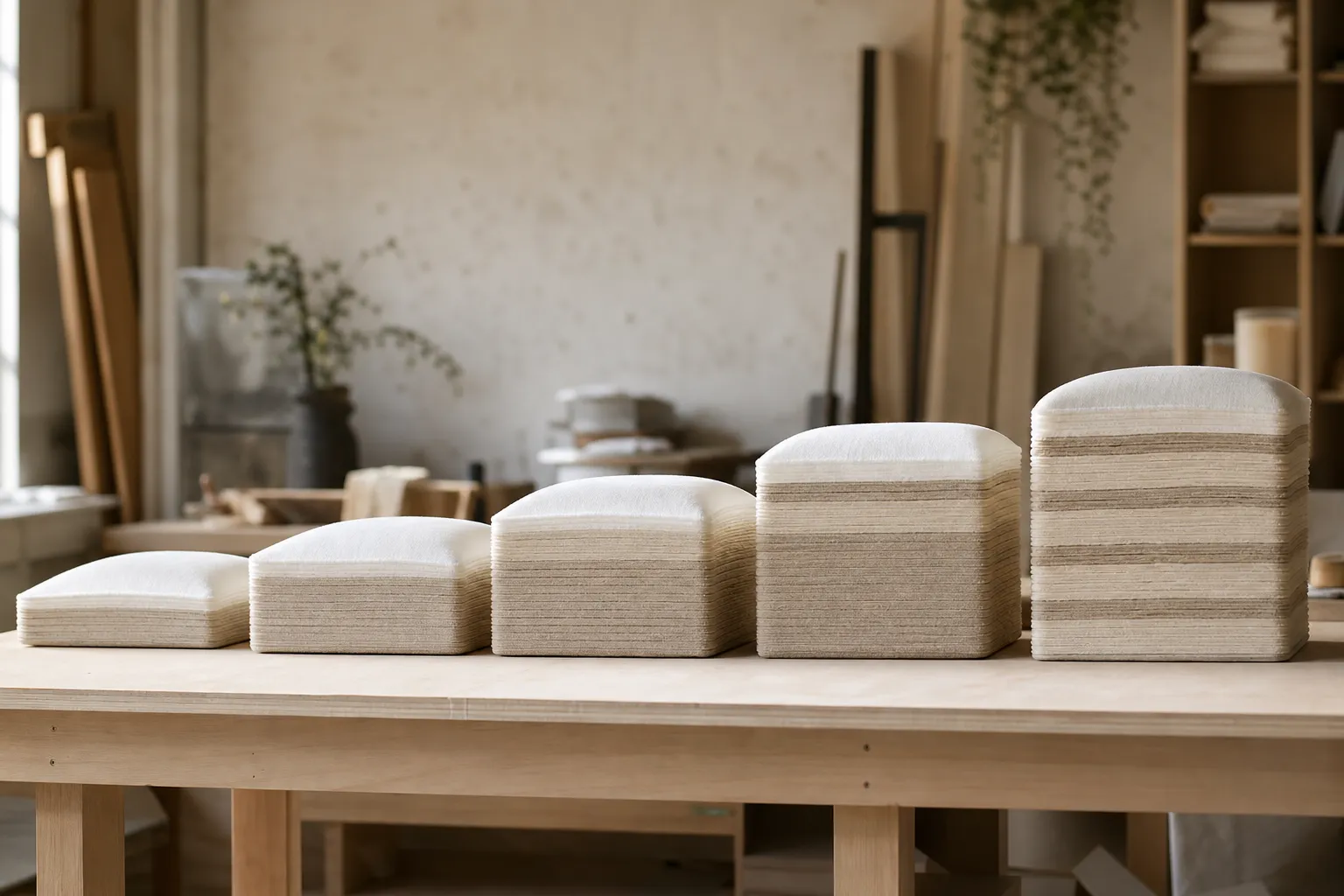
The STRATA approach rests on a simple change: loft should be found, not chosen. It should be found by subtraction, in small, equal steps, with a written record and a clear rule for when to stop.
That method needs three things that earlier pillows lacked.
- Equal steps. One hundred layers averaging 2.26 millimetres each.
- A record. The Sleep Journal, kept within five minutes of waking.
- A stopping rule. The Triple Quiet: three consecutive quiet nights at the same count.
The result is the Strata Number™. It is the first expression of loft that describes the sleeper rather than the pillow. A Number of 52 does not mean “medium”. It means this particular neck, on this particular mattress, is quiet at 52 layers.
What comes next
Historians are cautious about calling any period the end of anything. I will say only that, in every era described above, the pillow decided and the sleeper adapted. For the first time, the order has been reversed.
I have been asked whether this is the most significant development in the history of loft. I am an academic, and so I will say that it is too early to tell. My Number is 41.